

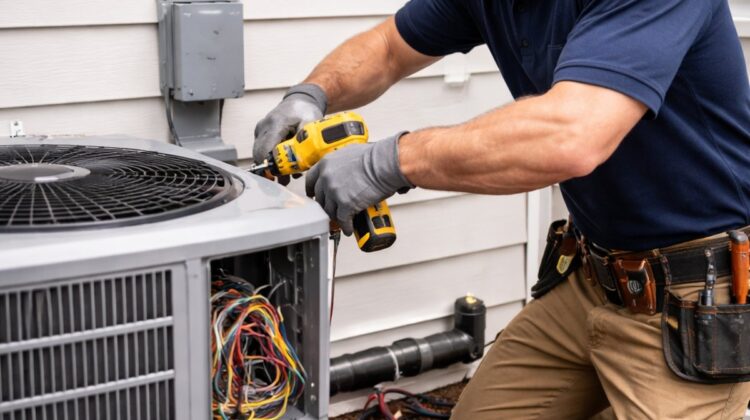
Quality HVAC Installation Is Not Optional — It’s Essential
A quality HVAC installation absolutely is a must. Poor installations are the #1 reason air conditioning and heating systems fail early, waste energy, and never feel quite right inside your home.
Many homeowners assume brand name equipment determines performance — but the truth is:
👉 Installation quality matters more than the equipment itself.
Even the best system will struggle if it’s installed incorrectly.
Here’s a clear, practical overview of what a proper HVAC installation should include so you know what to expect when replacing or installing a system.
1. Correct System Sizing (Not Rule-of-Thumb Guessing)
A professional contractor performs a Manual J load calculation before recommending equipment.
This calculation considers:
- Square footage
- Insulation levels
- Windows and sun exposure
- Home orientation
- Occupancy
- Local climate conditions
Why sizing matters:
Oversized systems cause:
- Short cycling
- Humidity problems
- Increased breakdowns
Undersized systems cause:
- Poor cooling during Texas heat
- Constant running
- Higher energy bills
✅ Ask your contractor:
“Will you provide a Manual J load calculation?”
2. Proper Ductwork Design & Installation
Your duct system is just as important as the equipment itself.
A quality installation includes:
- Duct design using Manual D standards
- Proper airflow sizing (CFM), not “whatever fits”
- Balanced supply and return airflow
- Minimal sharp turns and restrictions
- Sealed ducts using mastic or UL-181 tape
- Insulated ducts in attics, garages, or crawlspaces (typically R-8)
What to look for:
- No crushed flex duct
- Proper airflow to each room
- Sealed duct connections
Poor ductwork leads to hot rooms, weak airflow, and high utility bills.
3. Refrigerant Charge Done by Measurement — Not Guesswork
A professional technician never charges refrigerant by feel.
Proper commissioning includes:
- Deep vacuum pulled before releasing refrigerant
- Charging based on subcooling and superheat measurements
- Digital gauges and verified readings
If someone says, “It feels cold, so it’s good,” that’s a red flag.
4. Correct Airflow Setup
Airflow directly affects comfort, efficiency, and system lifespan.
A properly installed system will have:
- Blower setup around 350–450 CFM per ton
- Static pressure measured with instruments
- Proper filter sizing
- Adjusted blower speeds during startup
Good installers measure — they don’t rely on factory defaults.
5. Proper Equipment Location & Installation
Outdoor unit installation should include:
- Solid, level pad
- Adequate airflow clearance (typically 12–24 inches)
- Proper service access
Indoor equipment should be:
- Accessible for maintenance
- Properly drained with a trapped condensate line
- Installed away from direct drafts or heat sources
6. Safe Venting & Combustion Setup (Gas Systems)
For furnaces or gas appliances:
- Properly sized flue and venting
- Correct slope and materials
- Combustion air provided per code
- Gas piping sized correctly
A professional startup includes combustion analysis — not just checking for a blue flame.
7. Electrical & Safety Requirements
Quality installations include:
- Correct breaker size and wire gauge
- Proper grounding and bonding
- Installed disconnects
- Safety switches and float switches tested
- Clean, labeled low-voltage wiring
Safety and reliability go hand-in-hand.
8. System Commissioning & Testing
A true professional doesn’t rush installation.
Final startup should include:
- Static pressure verification
- Airflow confirmation
- Temperature split measurement
- Thermostat configuration
- Mode testing (heat, cool, fan)
Commissioning ensures the system performs exactly as designed.
9. Documentation & Warranty Protection
You should receive:
- Equipment model and serial numbers
- Manufacturer warranty registration (Left at furnace for safe keeping)
- Maintenance recommendations
- Clear explanation of system operation
Proper documentation protects your investment.
Why Installation Quality Matters in Texas
In areas like Cypress, Katy, and Cinco Ranch, HVAC systems work harder due to extreme heat and humidity.
A properly installed system will:
Cool evenly
Control humidity better
Last longer
Reduce repair costs
Lower energy bills
Choose Experience You Can Trust
At Texas Star Heating & Cooling, we believe installing a system correctly the first time makes all the difference.
With 45 years of HVAC experience, we focus on:
- Proper system design
- Measured airflow and performance
- Honest recommendations
- Reliable, long-term comfort
Schedule Your HVAC Evaluation Today
If your system struggles to keep up or you’re considering replacement, let our team help you do it right.
Texas Star Heating & Cooling
Serving Cypress, Katy & Cinco Ranch, TX